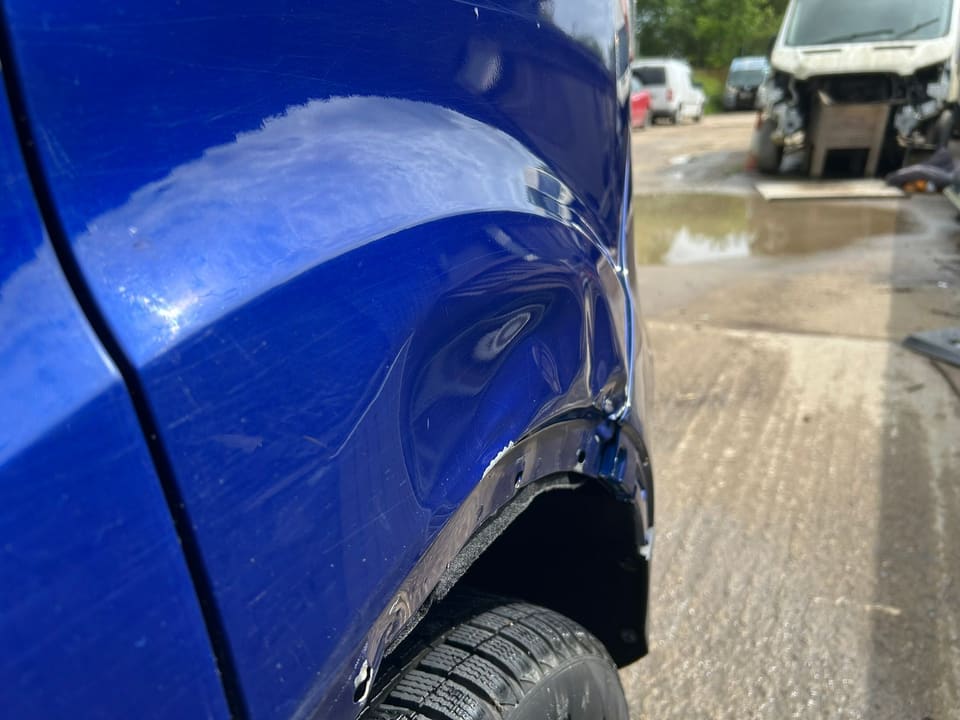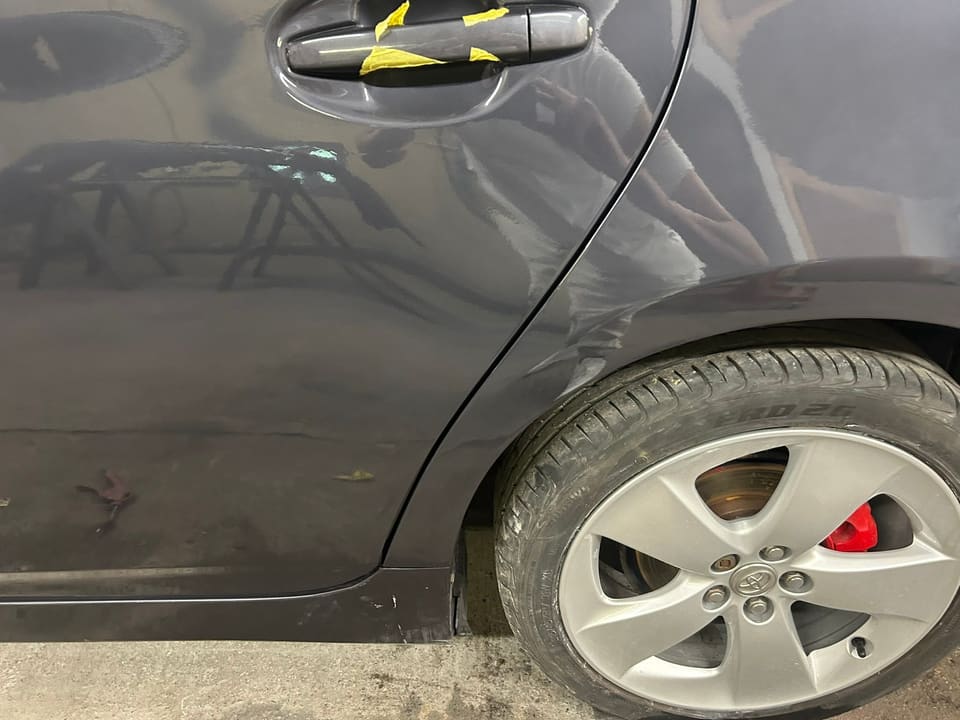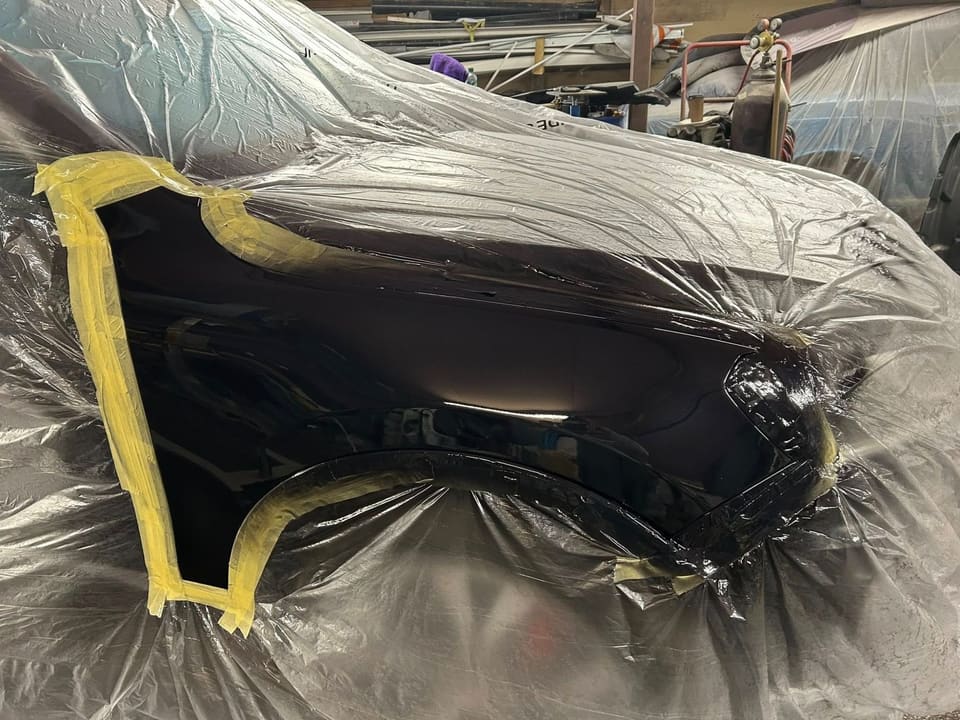
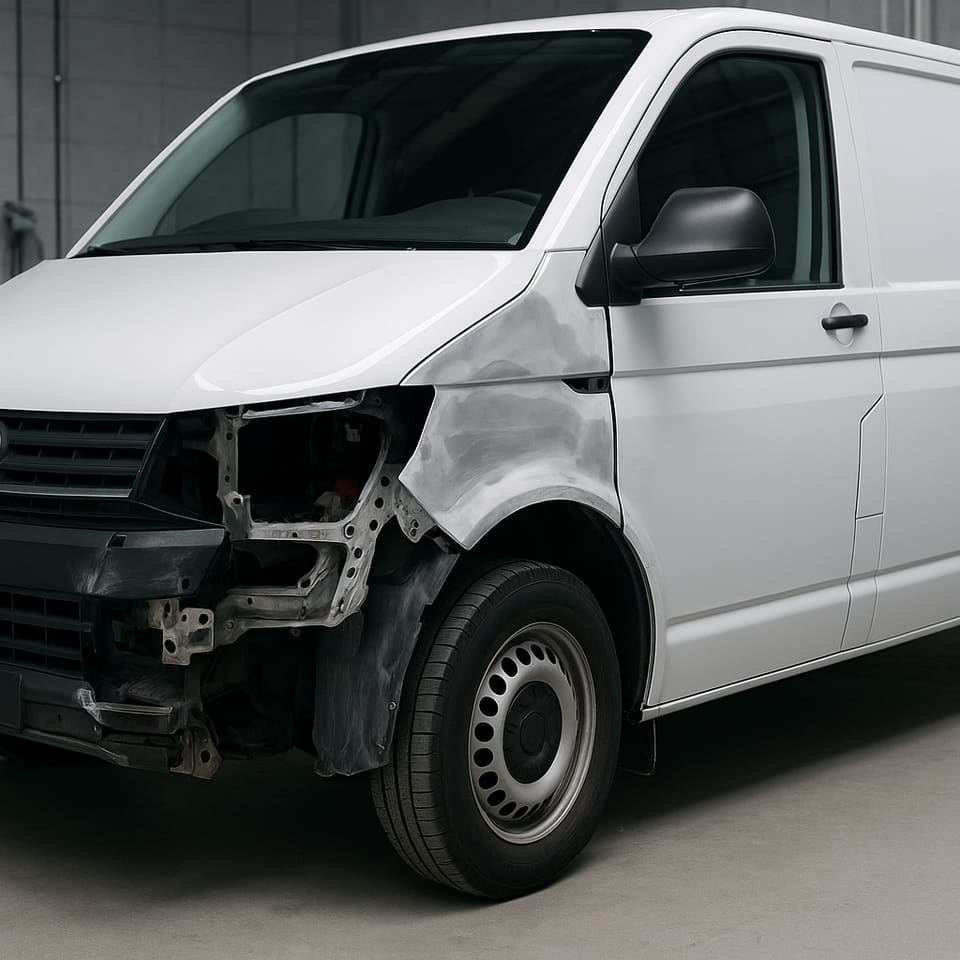
Work vans mostly get damaged in the same places, the rear doors, sliding door, bumpers, lower side panels and the roof edge. Fix anything that has broken the paint, anything that stops a door shutting or locking, and anything loose or sharp promptly. Cosmetic dents can wait for a quiet week, as long as you photograph them and keep a note.
A work van picks up damage in the same few places: rear doors, the sliding door, bumper corners, lower side panels and the roof edge. Fix anything that has gone through the paint, anything that stops a door shutting or locking, and anything loose or sharp, and do it promptly. Plain dents can wait for a quieter week. We repair light vans as well as cars at our workshop in Smallfield, near Horley and Gatwick, and van damage tends to follow a pattern.
Where do work vans usually get damaged?
Most van damage comes from loading, reversing and tight sites.
| Area | What we usually see |
|---|---|
| Rear doors | Dents from reversing into posts, bent hinges, doors that drop and catch |
| Sliding door | Scrapes along the runner, dents from bollards, a door that will not latch |
| Rear bumper and step | Cracks and scuffs from loading, splits at the corners |
| Lower side panels | Long scrapes from walls, skips and gateposts |
| Roof and gutters | Marks from roof bars, ladders and racks |
The roof is easy to forget. Where a roof bar foot sits, the paint can wear through, and bare metal rusts.
Which van damage should you fix straight away?
Anything through to bare metal
Once the paint is broken, water reaches the metal and rust starts. A small repair now is far less work than a rusted panel later. It is the same reason we say when stone chips need touching in on cars.
Doors that will not shut or lock
A rear or sliding door that has to be slammed, or that does not latch first time, is a security problem with tools on board. The government's MOT inspection manual section on body and structure treats a door that will not close properly as a major defect, and a sliding door likely to open by itself is a major defect too. Vans up to 3,500kg are tested under the same manual as cars, so the body rules are the same. We have a separate article on which body faults can fail an MOT.
Loose bumpers, steps and sharp edges
A bumper hanging off a clip can drop off on the motorway, and split plastic with a jagged edge can cut someone walking past. Many plastic bumpers can be welded rather than replaced. See our page on repairs to cracked or split bumpers.
Why does a tidy van matter for a trade business?
The van is often the first thing a customer sees, parked on their drive with your name on the side. A straight, clean van suggests you look after your kit. That is our opinion, not a statistic.
There is a safety side too. HSE guidance for employers says any vehicle used for your business should be safe and remain safe, that workers should carry out and record daily checks, and that defects should be put right promptly. It also points out that an MOT only covers basic defects. HSE's overview says the law applies to vans the business owns and to private vehicles workers use for business. A damaged door or loose panel belongs in those defect reports.
How do you photograph van damage for a quote?
Good photos save you a morning. On WhatsApp, send:
- One photo of the whole side or end of the van, so we can see where the damage is.
- One from about a metre away.
- One close-up, at a slight angle so the light shows the shape of a dent.
- A short note on what happened and whether the doors still shut and lock.
If there is signwriting or vinyl near the damage, say so.
How do you plan van repairs around work?
A van off the road costs you a day's work.
- Book around your quiet days. We are open Monday to Friday 9am to 6pm and Saturday 9am to 2pm.
- Group the jobs. A dented door, a scuffed bumper and a scraped panel are usually better done in one visit.
- Ask about collection. Collection and delivery in nearby areas can be arranged.
- Ask how long it will take. That depends on the damage, so we would rather look first than guess.
For plain dents with the paint unbroken, dent repair for side panels can sometimes be done without a respray. For long loading scrapes, scratch and scuff repair for loading marks is often enough.
Is it worth keeping a damage log for several vans?
If you run two or more vans, yes. A simple spreadsheet or shared photo album works:
- Date, van and driver.
- Photos of each new mark when it appears.
- Whether the paint is broken or a door is affected.
- When it was repaired and by whom.
A log stops small damage being forgotten until the end of a lease, and shows which van keeps picking up the same knock. Dated photos also help if you talk to an insurer or leasing company, though rules vary, so check your policy or lease agreement. When you ask any repairer for a price, it also helps to know what a written repair quote should cover.
Getting a price from us
Our van bodywork service covers light vans as well as cars. Send photos of the damage on WhatsApp to 07724 146 809, ring 01342 649 362 or email info@ericraft.co.uk. You can also get in touch through the contact page. The quote is free, with no obligation and no pressure.
Questions people ask
Do you repair vans as well as cars?
Yes. We work on cars and light vans at our workshop in Smallfield, near Horley.
Can a dented van fail its MOT?
A plain dent is not a fail on its own. A van can fail if damage leaves a sharp edge that could injure someone, a loose panel or bumper, or a door that will not close properly.
Is it worth repairing scrapes on a work van?
If the scrape has gone through to bare metal, yes, because rust can start there. Scrapes that only mark the top of the paint can usually wait.
How do I get a quote for van damage without taking it off the road?
Send clear photos on WhatsApp: the whole side, a mid-distance shot and a close-up at an angle. We will reply with a price or tell you if we need to see it.
Should I keep a record of damage on my vans?
It helps, especially with several vans or leased ones. Dated photos and a short note for each mark make it easy to plan repairs and to answer questions later.
Sources and further reading
- HSE, make sure vehicles used to drive or ride for work are safe
- HSE, employers, driving and riding safely for work
- GOV.UK, MOT inspection manual, body, structure and attachments
- GOV.UK, MOT inspection manual, introduction
This page gives general information, not legal or insurance advice. Check your own policy and the official pages above.