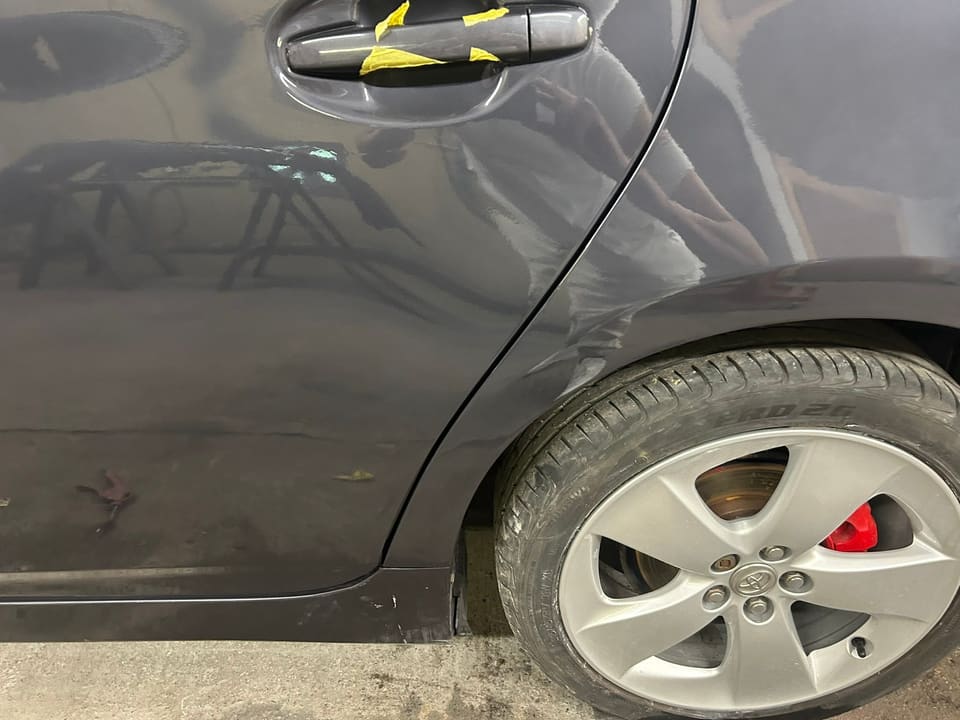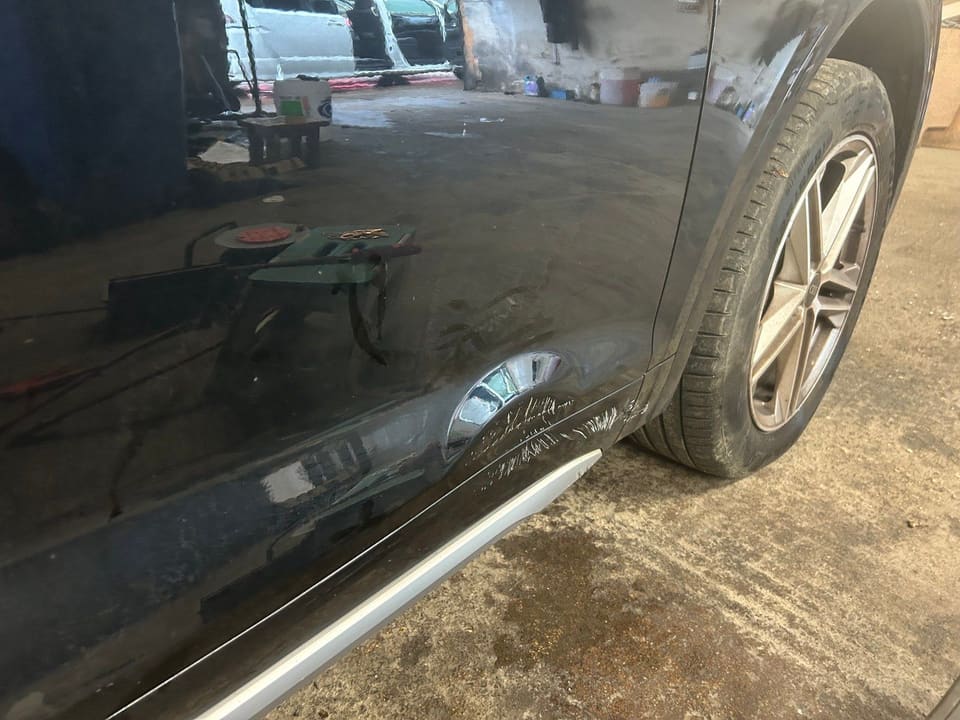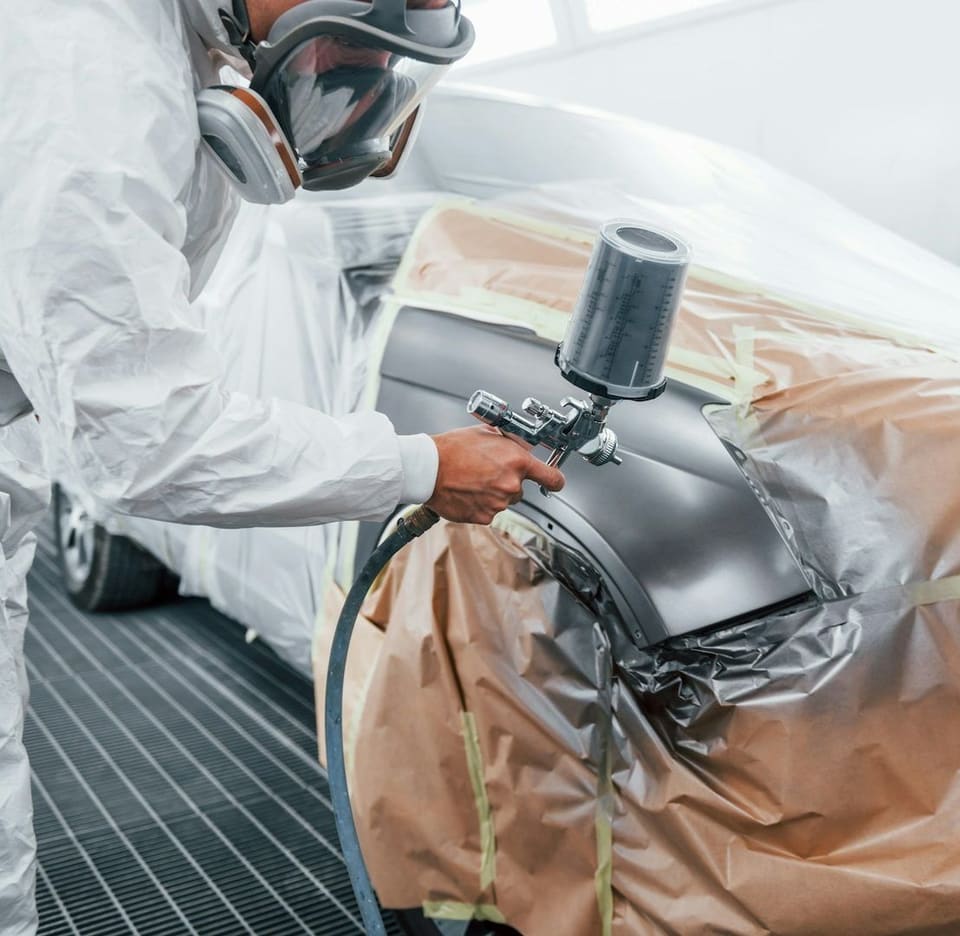
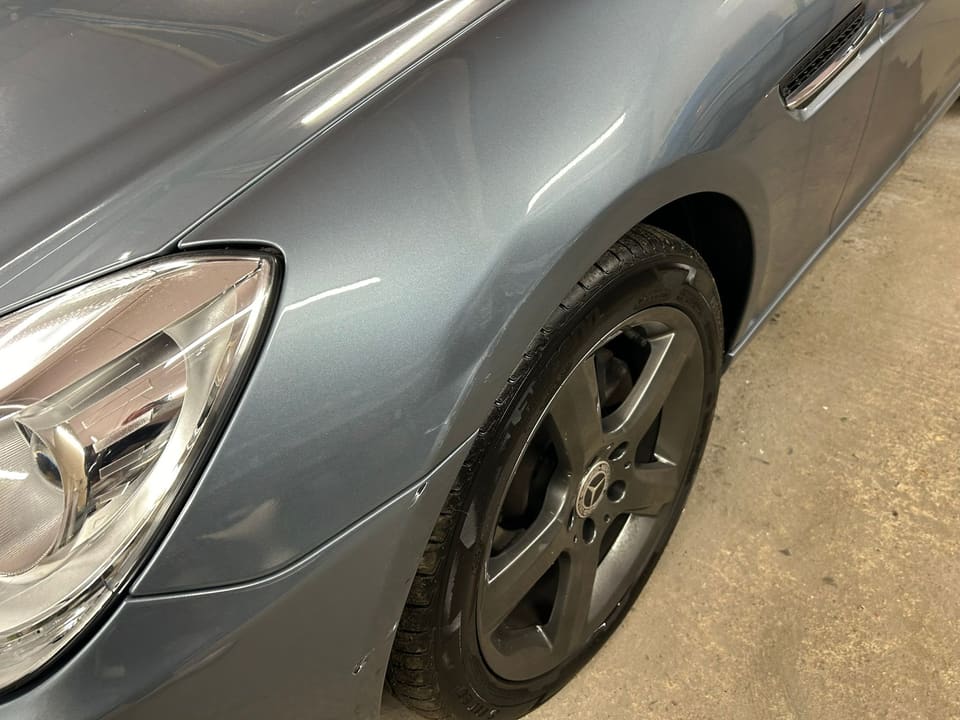
Stone chips come from grit and small stones thrown up by the vehicle in front, so the bonnet, front bumper and wing edges take most of them. A chip that only marks the top layer is mainly cosmetic, but one that goes down to bare metal can start to rust and is worth sealing soon. Small numbers of chips can be touched in or repaired locally; a bonnet covered in them is usually better repainted.
Stone chips are small craters in the paint where grit or a stone has hit the car at speed. Most are on the bonnet, the front bumper and the leading edges of the wings, because that is what faces the road. One or two tiny chips are mostly a looks problem. A chip that shows bare metal is worth sealing soon, because steel left open to water will rust. At our workshop in Smallfield, near Horley and Gatwick, the right fix depends on how many chips there are and how deep they go.
Why does my bonnet get so many stone chips?
Tyres pick up loose grit and flick it backwards, and the car behind drives straight into it. A few things make it worse:
- Motorway and fast A-road miles. The faster you go, the harder each stone lands.
- Following lorries and vans. Big tyres throw up more, and some carry loose material.
- Resurfaced roads. Loose chippings stay on the surface for a while after road works.
- Winter. Gritters spread salt and grit, and the salt gets into any chip quickly.
A longer gap helps. The Highway Code's rule on stopping distances asks for at least a two-second gap on high-speed roads, doubled in the wet, and points out that large vehicles need more room to stop. A bigger gap is safer, and it also means fewer stones reach your paint.
How do I tell if a chip has gone down to the metal?
Car paint is built in layers. On most modern cars there is a primer next to the metal, then a colour coat (the base coat), then a clear lacquer on top. Look closely in good daylight:
| What you see in the chip | What it usually means |
|---|---|
| A dull, slightly lighter mark, colour still there | Only the lacquer is damaged |
| A white or pale grey spot | Down to the primer |
| Shiny silver or a dark spot | Down to bare steel |
| An orange or brown ring | Rust has already started |
Plastic bumpers will not rust, but a chip still lets the paint lift over time. If you are not sure what you are looking at, send us a clear photo.
Why does a chip down to bare metal matter?
Rust needs iron, water and air. A chip that reaches the steel gives it all three. The RAC's guide to car rust explains that rust forms when iron reacts with oxygen and water, and that nicks and dents often lead to rust when they are left. Road salt speeds it up.
A pinprick can creep sideways under the good paint, and later you see a small blister. We explain that stage in our article on what bubbling under the paint means. Catching a chip early is a much smaller job than treating rust later, and if it has already got that far our rust repair service covers cutting it back and sealing it properly.
Touch-up pen, chip repair or a repainted bonnet?
There are three broad ways to deal with stone chips.
- A touch-up pen or brush. You dab colour-matched paint into the chip. It seals the metal, which is the main point. It will not look invisible: the touch-up sits as a small blob you can see from close up. For a handful of chips on an older car, this is a sensible first step.
- A proper chip repair. The chip is cleaned out, any rust is removed, primer goes in, then colour and lacquer, and the area is levelled and polished so it sits flush. This suits a small cluster of chips in one area. It is the kind of work our SMART repair for small areas is meant for, and deeper marks are covered by our scratch and scuff repair work.
- Repainting the bonnet or bumper. When the front is covered in dozens of chips, fixing each one is slow and the result looks patchy. Taking the panel back, priming and repainting it in a spray booth gives a clean, even surface again. Our page on partial and full car resprays explains how panel painting works.
What is blending?
Blending means fading new paint out into the panels next to the repair so the eye does not pick up a hard line. Paint that has lived outside changes slightly over the years, so a repainted bonnet is often faded a short way onto the wings. Whether that is needed depends on the colour, and we would tell you when we see it.
Can I stop stone chips coming back?
Not completely, if you drive on fast roads. Some owners fit a clear protective film over the bonnet and bumper, which takes the hit instead of the paint and can be peeled off later. Others have the front painted every few years. Both are reasonable choices. Through the winter, wash off salt so it does not sit in fresh chips. Our article on salt, grit and frost in the colder months has more on that.
Getting a price from us
Take a wide photo of the front in daylight and a close one of the worst chips, and send them on WhatsApp to 07724 146 809. You can also ring 01342 649 362 or email info@ericraft.co.uk. The quote is free and there is no pressure. Our contact page for Ericraft Bodyshop has the opening hours and directions to Smallfield.
Questions people ask
Are stone chips on the bonnet worth fixing?
If a chip has gone down to bare steel, yes, at least seal it, because steel left open to water will rust. Chips that only mark the top layer are mostly cosmetic, so it comes down to how much they bother you.
Will a touch-up pen stop a stone chip rusting?
A touch-up pen seals the chip from water and air, which slows or stops rust starting, as long as the chip is clean and dry first. It will not remove rust that is already there, and the repair will usually be visible close up.
Why does my front bumper have chips but the doors do not?
The front faces the road and takes the stones thrown up by the vehicle ahead. Doors and the roof are out of that line, so they stay much cleaner.
Do stone chips affect the MOT?
A few stone chips in the paint are a cosmetic issue. Rust is different, and corrosion on structural parts can be a problem at the test, so chips that have been left to rust are worth having looked at.
Sources and further reading
- GOV.UK, The Highway Code, general rules for all drivers and riders (rule 126)
- RAC, car rust guide: how to remove and prevent it
This page gives general information, not legal or insurance advice. Check your own policy and the official pages above.