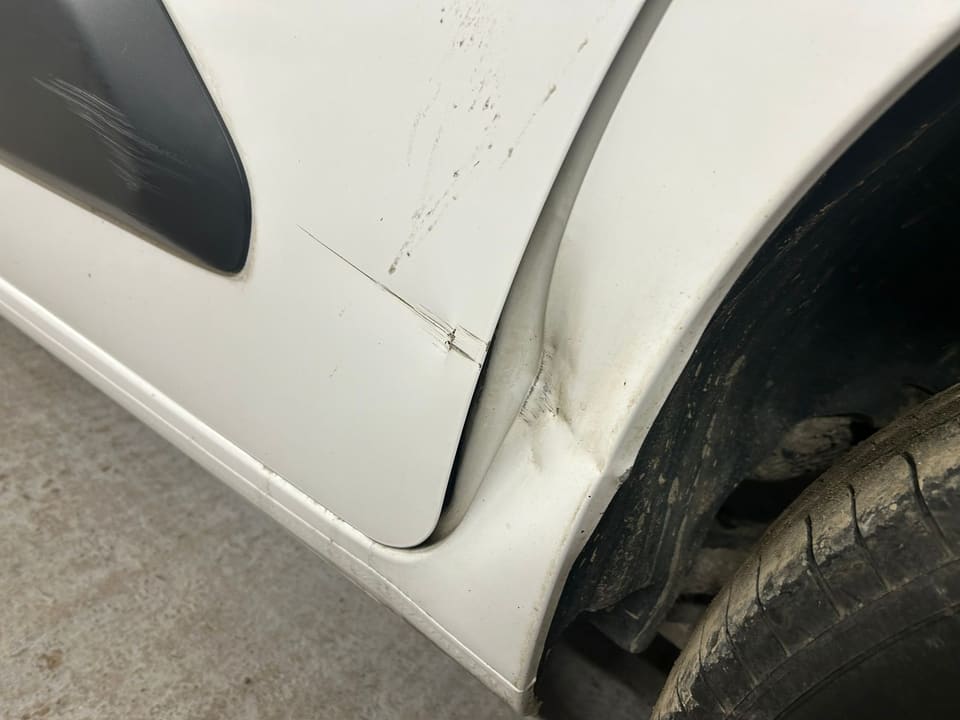
A dent or a scratch that is only cosmetic is not a reason to fail an MOT. Body damage becomes an MOT problem when it is a safety issue, for example a torn panel or bumper with an edge that could cut someone, a bumper or panel that is loose, a door, bonnet or boot that will not shut properly, rust that has made a hole near a mounting point, or a cracked lamp or broken mirror.
Yes, bodywork can fail an MOT, but only when the damage affects safety. A dent in a door or a scratch along a wing is not a fail on its own. The tester looks at whether a panel could injure someone, whether it is secure, whether doors and lids shut, whether rust has weakened the structure, and whether lamps and mirrors still work. We get asked this a lot at our workshop in Smallfield, near Horley and Gatwick, usually a week or two before a test.
What does the MOT check on bodywork?
The government's MOT inspection manual section on body, structure and attachments sets out what the tester looks at. The body check covers all panels, undertrays, spoilers and mirror housings, and the questions are about safety:
- Is a panel damaged or corroded so it could injure someone who brushes against it?
- Is a panel or bumper insecure, or likely to come off?
- Can the boot lid or tailgate be secured closed?
- Do the doors open and close properly?
- Is the structure sound where the brakes, steering, suspension and seat belts are mounted?
The same manual covers cars and light vans up to 3,500kg.
How do minor, major and dangerous defects work?
The manual's introduction sorts defects into three groups. A minor defect has no significant effect on safety, so the car passes with the fault noted. A major defect may affect safety, and the car fails. A dangerous defect is a direct and immediate risk to road safety, and the car fails. Advisories are notes about wear that is not yet a fail.
Which kinds of body damage can fail?
Here is how common body problems line up against the manual. The tester decides on the day, so treat this as a guide.
| What you can see | How the manual treats it |
|---|---|
| Bumper loose, or split with a jagged edge | Major, or dangerous if likely to fall off |
| Torn or rusted panel with a sharp edge | Major if likely to cause injury |
| Boot lid or tailgate that will not stay shut | Major |
| Door that will not close or open properly | Major |
| Bonnet that cannot be secured closed | Major, or dangerous if at serious risk of opening |
| Door mirror slightly damaged or loose | Minor |
| Door mirror missing or badly broken | Major |
| Rear lamp lens cracked so it shows white light | Major |
The government's guidance on lamps and reflectors also lists a seriously defective headlamp lens as a major defect. Mirrors and the bonnet catch sit in the visibility section.
When is rust an MOT failure?
The manual uses the term prescribed area, which means the load-bearing structure within 30cm of a mounting point for things like the brakes, steering, suspension or seat belts. There the tester checks by eye, then with finger and thumb pressure, and if needed with light tapping. The car fails if rust has made a hole, if the metal does not feel firm, or if gentle pressure goes through.
Outside those areas, rust only fails if it affects braking or steering, or noticeably weakens the structure. Surface rust on a wing is usually mentioned rather than failed. Paint bubbles are often the first sign of rust underneath, and we explain what bubbles under the paint usually mean separately.
The manual also says body filler is not an acceptable repair for load-bearing metal, and welded repairs must reach sound metal. So ask whoever does the work whether it is a structural repair or a cosmetic one.
What body damage is not an MOT matter?
Plenty of damage that bothers owners is not part of the test:
- Dents with no sharp edges, such as car park knocks on doors.
- Scratches, scuffs and peeling lacquer.
- Stone chips on the bonnet.
- A scuffed bumper that is still firmly fixed.
These can let rust in over time and matter when you sell, but you need not rush them before a test. The GOV.UK page on how the MOT test works also notes that the test does not cover the engine, clutch or gearbox.
Should you fix bodywork before the MOT?
If something in the table applies to your car, sorting it first saves a retest. The usual pre-test jobs we see are:
- A loose or split bumper. Plastic bumpers can often be welded and refixed, as our page on bumper repair and plastic welding explains. There is more on deciding between repairing and replacing a bumper.
- Rust coming through on a sill or arch. Our rust repair work page covers what we do, and we will tell you if it looks structural.
- A torn panel, or a door, boot or bonnet not shutting cleanly after a knock. That is general body work on panels and doors.
- Cloudy headlights, where headlight restoration for cloudy lenses is a quick job.
If you run a van for work, the same rules apply, and we have notes on keeping a work van tidy between jobs.
Getting a price from us
If a test is coming up and something worries you, send photos on WhatsApp to 07724 146 809, showing the whole panel and a close-up. You can also ring 01342 649 362, email info@ericraft.co.uk or use our contact page. The quote is free with no pressure. Only the tester can say whether a car will pass, but we can tell you what we would repair.
Questions people ask
Can a dent fail an MOT?
Not on its own. A dent fails only if the panel is torn or rusted so it could injure someone, or if the damage leaves a panel, door or lid insecure or unable to close.
Will a cracked bumper fail an MOT?
A bumper that is firmly attached with no jagged edges is not a fail. One that is insecure, or could injure someone when touched, is a major defect, and one likely to fall off is dangerous.
Does rust fail an MOT?
Rust fails when it has made a hole or left the metal soft within 30cm of a mounting point for the brakes, steering, suspension or seat belts. Elsewhere it fails only if it affects braking, steering or overall strength.
Will a broken wing mirror fail an MOT?
A slightly damaged or loose mirror is a minor defect, so the car can still pass. A missing, badly damaged or insecure mirror is a major defect.
Do scratches or stone chips fail an MOT?
No. Scratches, scuffs and stone chips are cosmetic and are not a reason to fail, though they can let rust start over time.
Sources and further reading
- GOV.UK, MOT inspection manual, body, structure and attachments
- GOV.UK, MOT inspection manual, appendix A, structural integrity and corrosion
- GOV.UK, MOT inspection manual, visibility
- GOV.UK, MOT inspection manual, lamps, reflectors and electrical equipment
- GOV.UK, MOT inspection manual, introduction
- GOV.UK, how the MOT test works
This page gives general information, not legal or insurance advice. Check your own policy and the official pages above.