
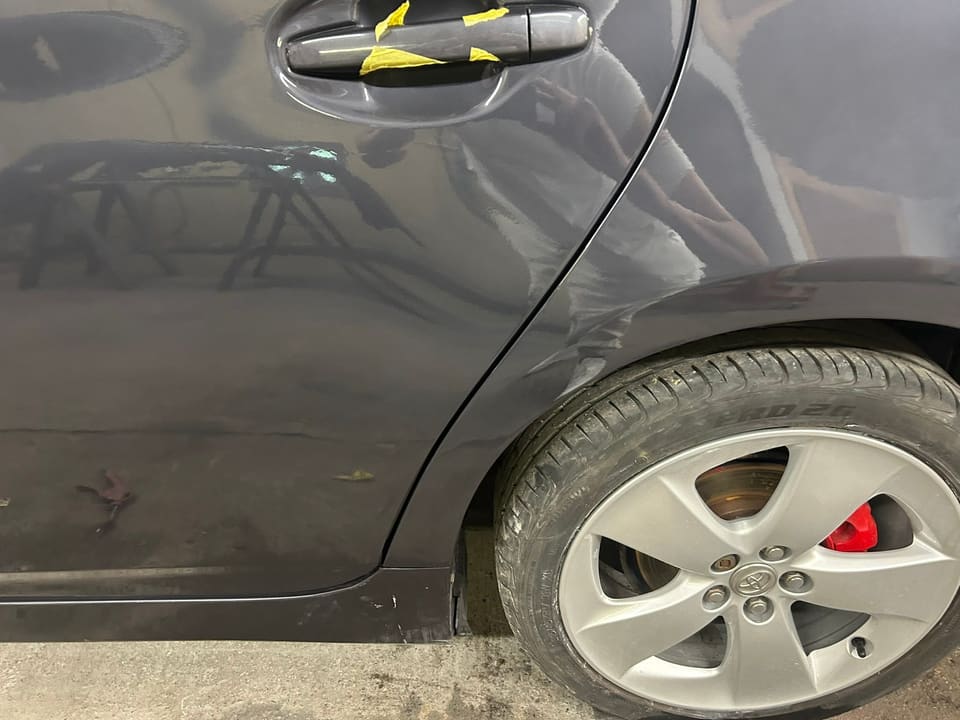
For small damage, compare the repair price with your excess first. If the two are close, claiming may save you very little and could cost you some of your no-claims discount. A body shop can price the job from photos, so you can decide before you ring your insurer. Check your own policy for the details.
Most people who find a new scratch or dent ask the same thing: do I put it through the insurance, or pay for it myself? There is no single right answer. It depends on your policy, the size of the damage and what your insurer does to your price afterwards. This page explains the pieces so you can work it out. It is general information, not insurance advice, and your policy documents always come first.
What is an excess?
Your excess is the part of any claim that you pay yourself. If your excess is a set amount and the repair costs more than that, the insurer pays the rest. If the repair costs less, you are paying all of it anyway. Which? makes the point plainly: the closer the claim amount is to your excess, the less benefit there is in claiming.
Look at your policy schedule for the figure. Some policies have a compulsory excess plus a voluntary one on top, and some add a further amount in certain cases, such as using a repairer your insurer does not recommend. We say more on that in choosing your own repairer.
What is a no-claims discount?
A no-claims discount (sometimes called a no-claims bonus) is the reduction in your premium that builds up for each year you do not claim. Which? notes that a claim can reduce it, which may push your premium up, and that it can take two or three years to get back the discount you had. Some people pay extra to protect the discount. Whether a small claim affects it, and by how much, depends on your insurer. Check your policy.
Ask your insurer what a claim would do to your price before you commit.
When does it make sense to claim?
A claim tends to make sense when the repair cost is well above your excess, or when the damage is large, structural or involves another driver. If someone else hit you and the other insurer is paying, the situation is different again, and you should tell your own insurer anyway. Our page on what to do after a minor accident covers who to call.
For a small scuff, a keyed door or a shallow dent, the sums often point the other way. Which? gives the example of minor body damage that costs little more than your excess: it may not be worth claiming if you would pay most of the bill yourself and lose some discount.
When might I be better off paying privately?
Paying privately can work out cheaper when the repair is small. Many marks do not need a panel replaced. A light scratch repair, a polish, or a dent that can be pushed out with SMART or paintless dent repair are all jobs that can fall under a typical excess. SMART repair means small to medium area repair: the damaged spot is repaired and blended in rather than repainting a whole panel.
Do not assume that paying yourself means your insurer never needs to hear about it. Policies differ, and some ask you to tell them about incidents even when you do not claim. The AA and Which? both advise reporting an incident to your insurer, and your policy will say what it needs from you.
How do I find out what the repair would cost?
Get a repair price before you decide, not after. A body shop can usually price a small repair from photos, so you can compare the figure against your excess without leaving the house. Take photos in daylight from a step back and then close up, with and without a coin or hand for scale. We cannot always tell the full story from a picture, and we will say so. If it needs a look in person, you can bring the car to our workshop in Smallfield, near Horley and Gatwick.
Once you have the number, set it beside your excess. If the repair is below the excess, the decision is easy. If it is above it, look at the gap. Then ask your insurer what a claim would do to your price at renewal.
What if I only just noticed the damage?
Scratches and dents often turn up after a car park visit that you do not remember. If you do not know who did it, there is no one else's insurer to pay, so any claim would be on your own policy. Take photos now, note when and where you think it happened, and weigh up the price. If the car is in a car park, check for security cameras and tell the car park owner.
A quick comparison
| Question | Paying yourself | Claiming |
|---|---|---|
| Who pays the repair? | You pay all of it | You pay the excess, the insurer pays the rest |
| Effect on discount | None from the repair itself | May reduce your no-claims discount |
| Who chooses the repairer? | You | Often your choice, but check your policy |
| Paperwork | A quote and an invoice | Claim form and insurer's checks |
Getting a price from us
Send photos of the scratch or dent on WhatsApp 07724 146 809, ring 01342 649 362 or email info@ericraft.co.uk. For many quick jobs we reply with a price from the photos, free and with no obligation. We can also repair larger bumper damage or tackle a whole panel when needed. See our contact page for all the ways to reach us.
Questions people ask
Is it worth claiming for a small scratch?
Often not. If the repair costs about the same as your excess, you get little back and may lose some of your no-claims discount. Check your policy and ask your insurer before you decide.
Will a claim always affect my no-claims discount?
Not always, and it depends on the insurer and any protection on your discount. Which? says a claim can reduce it and that it can take two or three years to rebuild.
Do I still need to tell my insurer if I pay for the repair myself?
Many policies ask you to report incidents even when you do not claim. Both Which? and the AA advise telling your insurer, so read your policy wording.
Can a body shop give me a price before I phone my insurer?
Yes. Send photos to a body shop and ask for a price. Then you can compare it against your excess and make the call with the figures in front of you.
Does paying privately mean I lose any cover?
Not by itself. The policy stays in force, but check whether it requires you to report the damage, and whether any later claim for the same area could be affected.
Sources and further reading
This page gives general information, not legal or insurance advice. Check your own policy and the official pages above.