It depends on the damage, not on a set figure. A light scuff on a solid colour is a much shorter job than a split bumper with parking sensors, a metallic colour that needs blending into the wings, or a part that has to be ordered. We give you a time once we have seen the bumper, from photos or in person.
There is no single answer. It comes down to how deep the damage goes, what is fitted behind the bumper, whether parts need ordering, and the colour of your car. Once we have seen the damage at our workshop in Smallfield, near Horley and Gatwick, or in your photos, we can tell you how long we need the car.
If you are still deciding whether the bumper can be saved at all, our guide on whether to repair or replace a damaged bumper covers that. This page is about time.
Is a scuff quicker to fix than a crack?
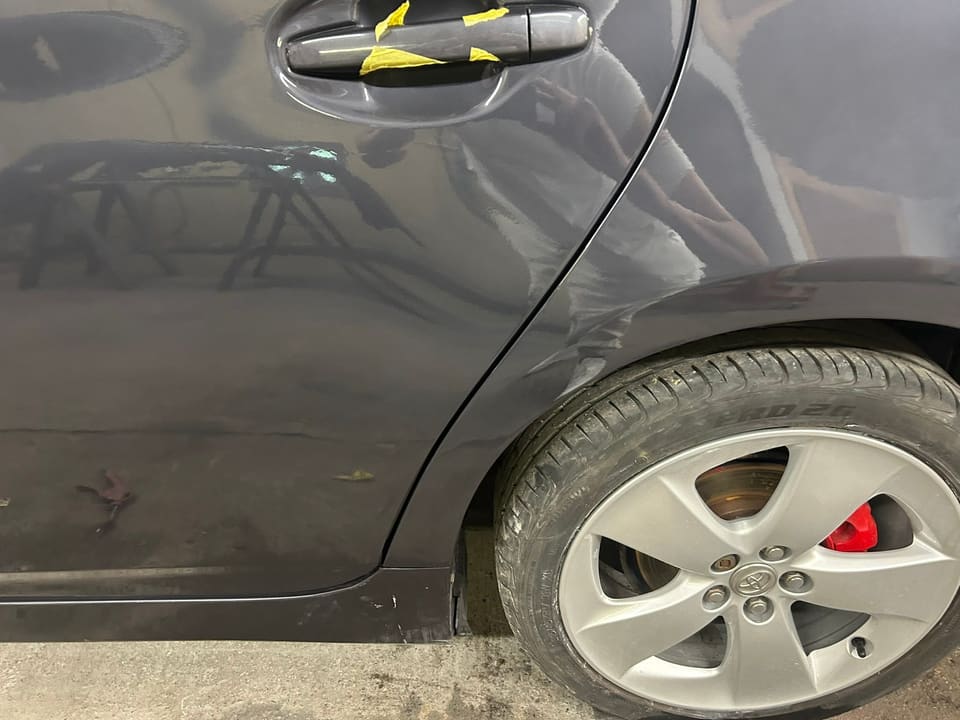
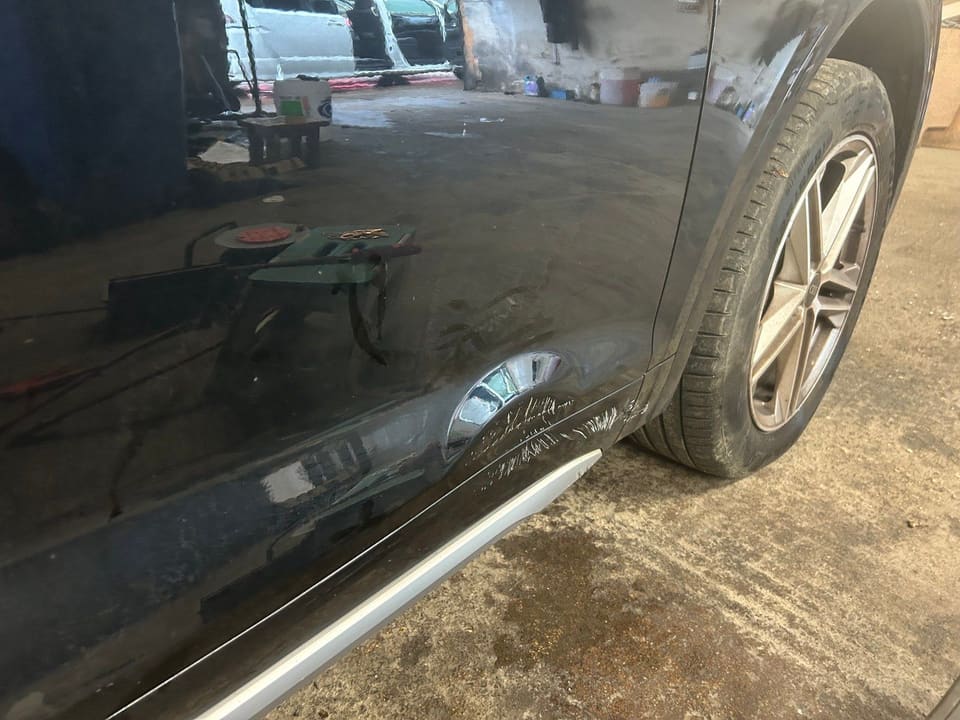
Usually, yes. A scuff is surface damage: the paint and perhaps a thin layer of plastic have been rubbed away, but the bumper is still in one piece. The repair is mostly preparation and paint.
A crack or split needs a structural repair before any painting starts. The plastic has to be joined and made strong first.
| Damage | What usually has to happen |
|---|---|
| Light scuff on a corner | Sand, prime, paint, blend |
| Deep gouge | Fill and shape the plastic, then paint |
| Crack or split | Plastic weld, reinforce, fill, then paint |
| Broken tabs or brackets | Repair or replace the fixings, then refit |
For small marks, our SMART repair for small areas can sometimes keep the work to one patch rather than the whole bumper.
What is plastic welding and does it add time?
Plastic welding means melting the plastic either side of a crack and fusing it back together, often with a filler rod of matching plastic. It is a proper repair, but each weld has to cool and be shaped before filler and primer go on. A long split across a curve takes more work than a short one on a flat area.
Do parking sensors and cameras slow a bumper repair down?
They can. Many bumpers carry parking sensors, and some carry cameras or radar used by driver assistance systems such as automatic emergency braking. These are removed and refitted.
PPG, one of the large refinish paint makers, says in its guidance on painting bumper sensors that a sensor should only be painted if the original was, and that the car maker's repair instructions should be checked.
Where a repair touches driver assistance sensors or parts near them, Thatcham Research's statement on post-repair calibration says the sensors must be calibrated afterwards and checked against the manufacturer's tolerances. If your car needs that, it is an extra stage, and we will tell you before we start. Thatcham also lists calibration among the things that affect repair time on its page about repairability.
What happens if a part has to be ordered?
If the bumper is beyond repair, or a bracket, grille, sensor or trim piece is broken, the part has to arrive before the job can finish. That depends on the car and the supplier, not on us. We will tell you what we are waiting for, and where we can, we keep the car until the part is here.
Why does paint colour make such a difference?
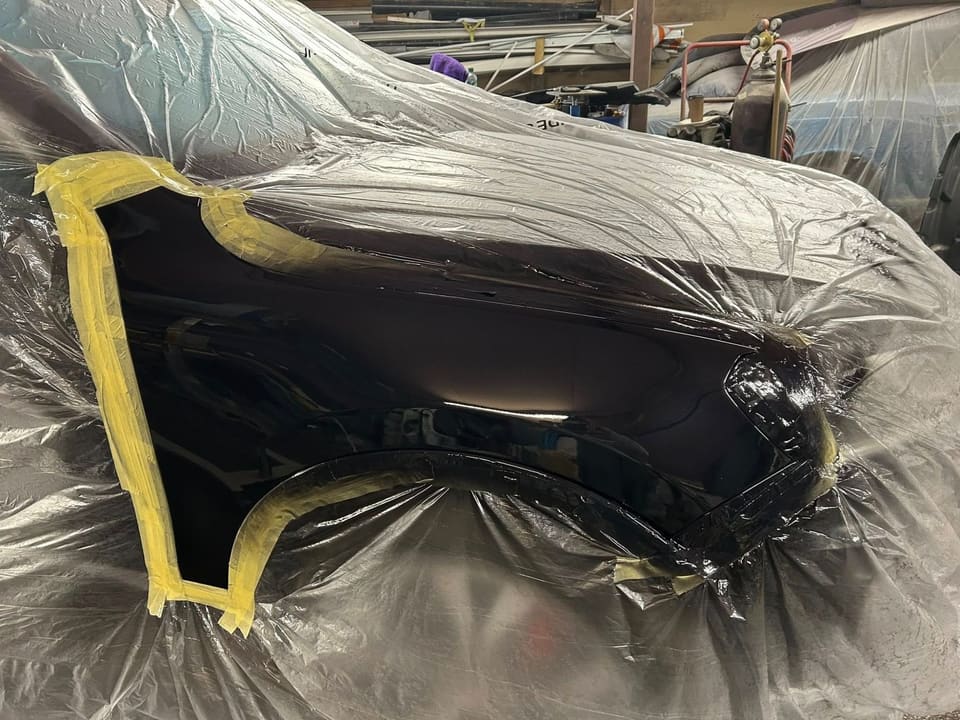
A solid colour, such as a plain white or red, is the most straightforward to match. Metallic and pearl colours carry flakes that catch the light, and they look different depending on how the paint is sprayed. To hide the join, the new colour is usually faded into the panels next to the bumper, which on a front bumper often means the edges of the wings. This is called blending.
PPG's blending procedure for waterborne basecoats allows a wider blend area for three-stage pearl colours than for ordinary ones. More area to prepare and paint means more time. Our article on how paint colour matching works explains the mixing and checking that comes first.
How long does the paint need to dry?
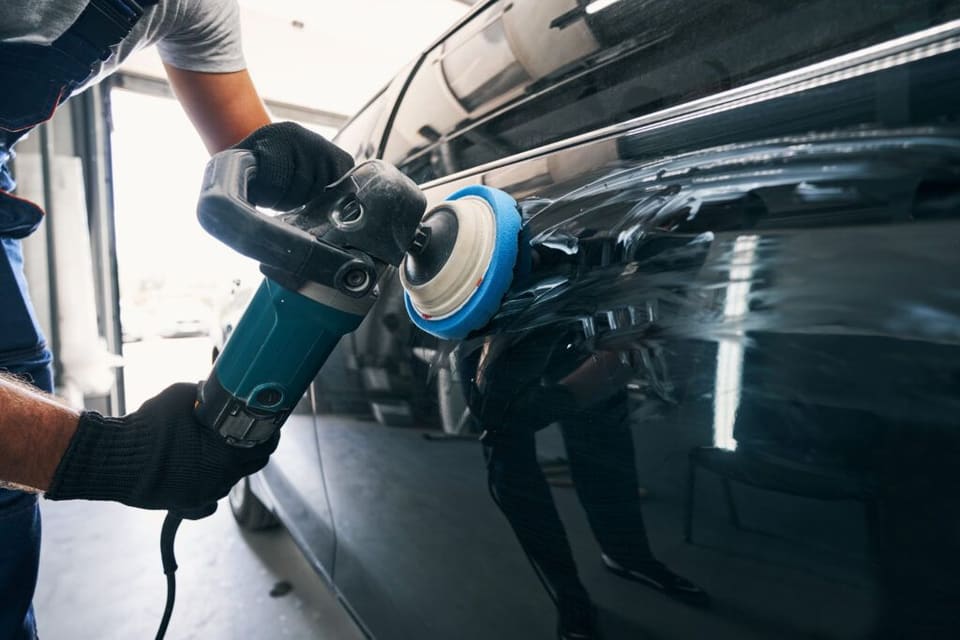
Paint goes on in layers: primer, colour and a clear lacquer on top. Each layer dries before the next, and the finish must harden before polishing.
Drying depends on the product and the temperature. PPG's announcement of a fast-drying clearcoat shows one lacquer drying at different speeds at different temperatures, which is one reason we paint in a spray booth. Rushing this stage is how you get runs, dust and soft paint.
Does booking and assessment add time?
A little, but it saves time later. Clear photos let us judge the job, order parts and book the right length of time. Good photos show:
- The whole bumper from a few steps back.
- Close-ups of each crack, scuff or dent.
- The corners and the joins with the wings.
- Any sensors or cameras near the damage.
Some damage only shows once the bumper is off, such as a cracked bracket. If we find something like that, we ring you before doing anything extra. Our page on the stages of a body shop repair sets out the full order of work. If other panels are marked too, scratch and scuff repairs on other panels can often be done at the same visit.
Getting a price from us
The quickest way to find out how long your bumper will take is to send photos of the damage on WhatsApp on 07724 146 809. You can also ring 01342 649 362 or email info@ericraft.co.uk. The quote is free with no obligation, and for most bumpers we can reply from the photos. There is more on our contact and opening hours page, and the work itself is described on our bumper repair service page.
Questions people ask
Can a bumper repair be done in a day?
Some can, some cannot. It depends on the damage, the colour and any parts, and we tell you once we have seen it.
Why can you not give me a time over the phone?
Because it depends on things we need to see. Photos on WhatsApp are usually enough.
Does a metallic bumper take longer than a solid colour?
Often it does. Metallic and pearl colours usually need blending into the panels next to the bumper so the join does not show, and that adds preparation and paint.
Do parking sensors need recalibrating after a bumper repair?
Plain parking sensors are refitted and tested. Cameras and radar used by driver assistance systems may need calibrating to the car maker's tolerances, as Thatcham Research advises.
Will I need to leave the car with you?
For most bumper repairs, yes, because the paint needs time in the booth to dry and harden. Collection and delivery in nearby areas can be arranged if you ask.
Sources and further reading
- Thatcham Research, repairability
- Thatcham Research, ADAS post-repair calibration statement
- PPG Refinish, bumper sensor process (PD-0235)
- PPG Refinish, blending waterborne basecoats (PD-0706WB)
- PPG news release, fast-drying clearcoat for the Deltron line
This page gives general information, not legal or insurance advice. Check your own policy and the official pages above.