
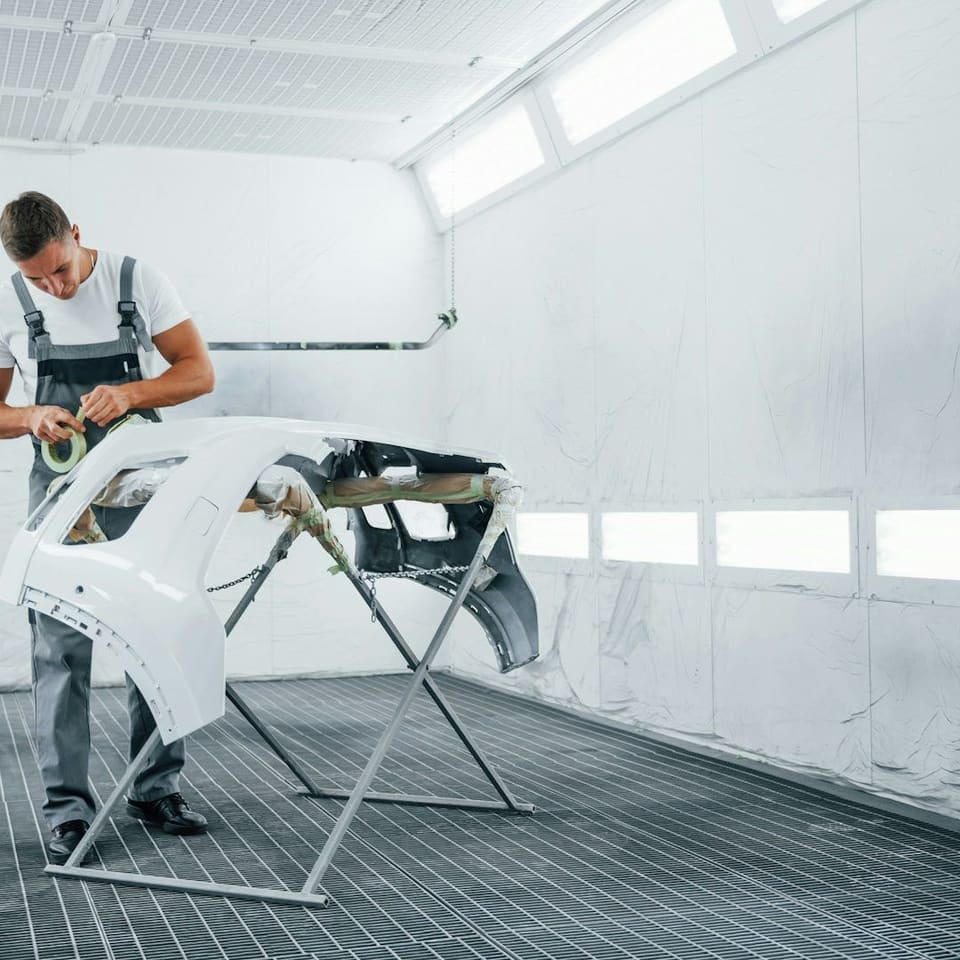
A typical repair goes in a set order: assess the damage, take parts off, repair the panel, prepare and prime it, paint it in a booth, polish, refit and check. Each step depends on the one before, which is why a good finish cannot be rushed or skipped.
Most people have never seen inside a body shop, so it is fair to wonder what happens once the keys are handed over. The short version is that the job runs in a fixed order. The damage is looked at, the parts in the way come off, the panel is repaired, then it is prepared, primed, painted, polished and refitted. At the end it is checked against the rest of the car.
Here is what that looks like in a small workshop like ours in Smallfield, near Horley and Gatwick.
What are the steps of a typical repair?
The names change a little from shop to shop, but a normal accident or panel repair follows this order:
- Assess the damage. We look at the panel in good light, feel along it with a hand, and check around it for anything the first glance missed. A bumper that looks fine from the front can have a cracked mount behind it.
- Strip and remove. Lights, trim, handles and other parts that are in the way are taken off. This is partly so the paint can be sprayed properly and partly so we can see what is underneath.
- Repair the panel. Dents are worked back towards their shape. Small holes and low spots are filled. Plastic is welded where it has split. Where a panel is too far gone, it is replaced instead.
- Prepare the surface. The area is cleaned, degreased and sanded smooth. This is the dull, dusty part of the job, and it decides how the finish will look in a year's time.
- Prime. A primer coat seals the repair and gives the paint something to grip. It is sanded again once it has dried.
- Paint in the booth. The colour is mixed to match your car, then sprayed in a spray booth, which is an enclosed, ventilated room that keeps dust away from wet paint. Clear lacquer goes on top.
- Polish. Once the paint has hardened, it is machine polished so the new area shines in the same way as the old.
- Refit. The parts that came off go back on, and anything that needs adjusting is lined up again.
- Check. We look over the work in daylight and under lights, check the gaps between panels, and make sure everything works before you collect.
This is the same basic order the National Careers Service describes for the trade: assessing the damage, removing parts, repairing panels, and refinishing so the colour and finish match the bodywork around them.
Why does the preparation matter so much?
Paint only shows what is under it. A ripple left in the panel will still be there once it is sprayed, and often looks worse under gloss.
The RAC's own description of a respray puts the sequence in the same terms: check the bodywork, take parts off and cover the rest, clean and degrease, sand, fill any dents, then prime before the colour goes on. Most of the effort in a good repair is in those first stages, and very little of it is visible once the car is finished.
Why take things off rather than mask around them?
Masking tape leaves an edge. If a door handle or a light is left in place, the paint can build up around it and show a line later.
Taking the part off lets the paint run cleanly into the gap behind it. It also lets us check whether the bracket or clip underneath was damaged, which is a common thing to find with a knock to a bumper or a wing. Our accident repair page covers the types of damage we deal with.
What if the damage turns out worse than it looked?
It happens. Once the bumper is off, or the panel is stripped back, a crease or a cracked bracket can show that was hidden behind trim. When that happens we tell you what we have found before carrying on, rather than leaving you to find out at handover.
A photo sent on WhatsApp is a good start for a price, but we cannot tell everything from a picture. We would rather say so than guess.
Is every repair the full list of steps?
No. A small dent that can be pushed out from behind may never need paint at all. The RAC notes that paintless dent repair works on small dents without filling, sanding or repainting. Our SMART repair page explains which jobs suit that approach.
At the other end, a damaged wing or door can need the whole list, plus blending the new colour into the next panel so there is no visible join. You can read more about the choice between a spot, panel or blend on our page about a car respray.
Can I see what the finished work looks like?
If the job is a plastic bumper, our bumper repair page shows what a welded and filled repair looks like in outline, and our gallery of completed repairs shows finished cars.
Getting a price from us
Send photos of the damage on WhatsApp to 07724 146 809, or ring 01342 649 362, or email info@ericraft.co.uk. You can also use our contact page. The quote is free, with no obligation. For the quick jobs we can usually reply with a price from the photos. For anything bigger we will want to look at the car first.
Questions people ask
How do I know the paint will match the rest of the car?
The colour is mixed to the car's paint code, then checked against the panels around it, because paint fades a little over the years. Where the match needs help, the new colour is blended into the next panel.
Will my car need to stay overnight?
That depends on the damage. A small repair may be done in a short visit, while a panel that needs filling, painting and curing takes longer. We will tell you when you bring it in or send the photos.
Do you take off parts such as lights and door handles?
Yes, where it helps the finish. Parts that sit in the repair area are removed and refitted after painting so the paint is clean around them.
Is the work checked before I collect the car?
Yes. We look over the repair in daylight and under lights, check the panel gaps, and make sure lights and fittings work.
Can you repair my car after an insurance claim?
We do accident and insurance repairs. If you can choose your own repairer, and what your insurer requires, depends on your policy, so check your policy documents or ask your insurer first.
Sources and further reading
- National Careers Service, vehicle body repairer
- RAC, how much does it cost to respray a car (preparation steps)
- RAC, book accident repairs
- Body Shop Business, Working Magic: Paintless Dent Repair
This page gives general information, not legal or insurance advice. Check your own policy and the official pages above.