
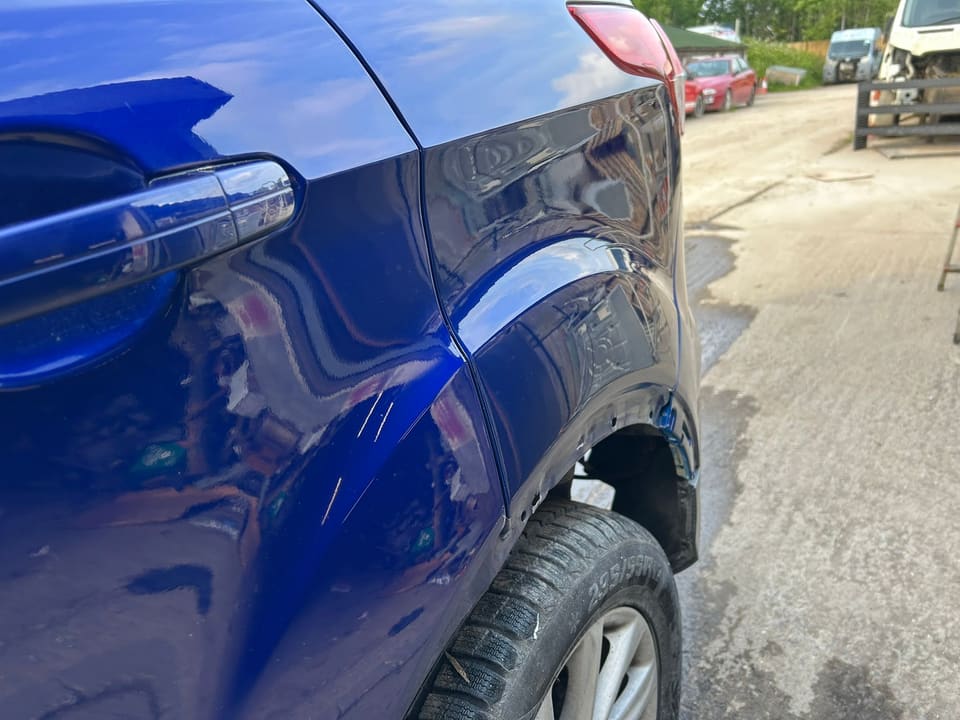
A paint code tells the shop which colour your car left the factory in. It does not tell them how that colour looks on your car today. So the shop mixes from the code, checks the mix against the car, adjusts it, and blends the new paint into the next panel so the join does not show.
A colour match starts with the paint code, but it does not end there. Your car's paint has been out in the weather, and the code cannot know that. A good match comes from mixing the paint, comparing it with the car, adjusting it, and then blending it into the neighbouring panel. We do this in a spray booth at our workshop in Smallfield, near Horley and Gatwick.
What is a paint code?
A paint code is a short combination of letters and numbers that the maker gives each colour. It is usually on a plate or sticker on the car, often in a door shut, under the bonnet or in the boot, though the spot varies between makes. Your handbook may say where. A paint supplier can look up the code and give the shop a starting recipe, which is a list of tints to mix.
It is a good start. It narrows the choice down from thousands of colours to one family of colours.
Why is a code not enough on its own?
Several things get in the way.
- Variants. A trade article on measuring refinish colour points out that the same colour code can look slightly different depending on which factory sprayed it, because the spray equipment, ovens and robot paths are not identical. Suppliers list alternative formulas for the same code for this reason, and they have kept adding them as new model years arrive.
- Ageing. Your car has been in the sun and rain for years. Paint that is five or ten years old no longer looks the way it did on the day it was sprayed. A fresh mix of the original formula can come out a shade stronger or brighter. This is our own experience at the bench rather than something we have a source for, and every car is different.
- Viewing angle. Metallic and pearl paints change as you move around the car. We say more on that below.
- Different eyes. People do not all see colour in the same way. A match that one person calls perfect may look a little off to someone else, which is another reason to look at a repair in daylight before you collect the car.
How is colour measured?
Many repairers use a hand-held colour reader, called a spectrophotometer. It measures the light that bounces back from the paint and turns it into numbers. A paint maker's database then offers the closest formula, and some readers suggest small changes to the tints.
Another trade magazine piece on spectrophotometers describes them as a very useful tool, with limits. The reading is a starting point, not a finished match. The reader depends on a clean, polished and flat spot on the panel, and highly reflective silvers can confuse it. The usual advice in the trade is to spray a test card and compare it with the car before any paint goes on the panel.
So the machine helps, and a person with a trained eye still checks the result. That is how it works at our shop too: we mix, we spray a test, we look at it in daylight and in the booth, and we adjust.
Why do metallic and pearl colours take more care?
Metallic paint has tiny flakes of aluminium in it. Pearl paint has flakes that bounce light in different colours. The flakes sit at different angles in the paint, so the colour looks lighter when you look straight at it and darker when you look along it. Trade writers call these the face and the flop of the colour.
That is why one reading cannot capture it. A reader measures from several angles, and it still struggles with sparkle. The spray test card matters most on these colours.
What is blending?
Blending means spraying the new colour onto the repaired panel and fading it out gradually across the next panel, so there is no hard line where one paint stops. The eye reads a gradual change as one colour. It reads a sharp edge between two near-matches as a mismatch.
On many cars the shop will blend into the panel next to the repair for that reason, even if that panel has no damage. A small repair on a rear wing might involve a light pass of colour onto the door or the rear body panel beside it. Blending is a normal part of colour matching and it is not a sign that anything extra is wrong.
You can see how the finish is done on our car respray page. For small marks, where a full panel respray is not needed, have a look at our scratch repairs page. If the colour work follows a collision, our accident repair page explains how those jobs run.
Can you match an old, faded car?
Often yes, but it takes more care. If the paint on the roof or bonnet has faded or gone dull, the shop can mix to the car as it is now and not to the code, and then blend. If the old paint has failed completely (peeling lacquer is the usual sign), the whole panel may need doing. We cannot tell from a photo how far the fade goes, and we will look at it with you.
Dull, oxidised paint can sometimes be brought back with a machine polish, and that may help before the colour is checked. Our polishing and detailing page has more about that.
Getting a price from us
Send photos of the damage, with one wide shot of the whole panel and one close one, on WhatsApp on 07724 146 809. You can also ring 01342 649 362 or email info@ericraft.co.uk. The quote is free and there is no pressure. If the car has an unusual colour, tell us the make and year and, if you have it, the paint code. There is more on our contact page.
Questions people ask
Where do I find my car's paint code?
It is normally on a plate or sticker on the car, often in a door shut, under the bonnet or in the boot, though the position varies between makes. Your handbook should say where. If you cannot find it, tell us the make, model and year and we can usually work it out.
Will the new paint match exactly?
A good match should look the same to the eye in normal light, but exact is hard to promise on an older car, because paint ages and the original colour may vary from batch to batch. That is why we test and blend rather than relying on the code.
Why do you paint part of the next panel?
Blending fades the new paint into the neighbouring panel so there is no visible edge. The join is hard to see because the colour changes gradually.
Are metallic and pearl colours harder to match?
Yes. The flakes in the paint make the colour change with the angle you look from, so they need more testing and checking by eye than a plain solid colour.
Can I send a photo of the colour to get a price?
You can send photos for the damage, and that is enough for most quotes. A photo cannot show us the colour accurately, so we will check the colour when we see the car.
Sources and further reading
This page gives general information, not legal or insurance advice. Check your own policy and the official pages above.