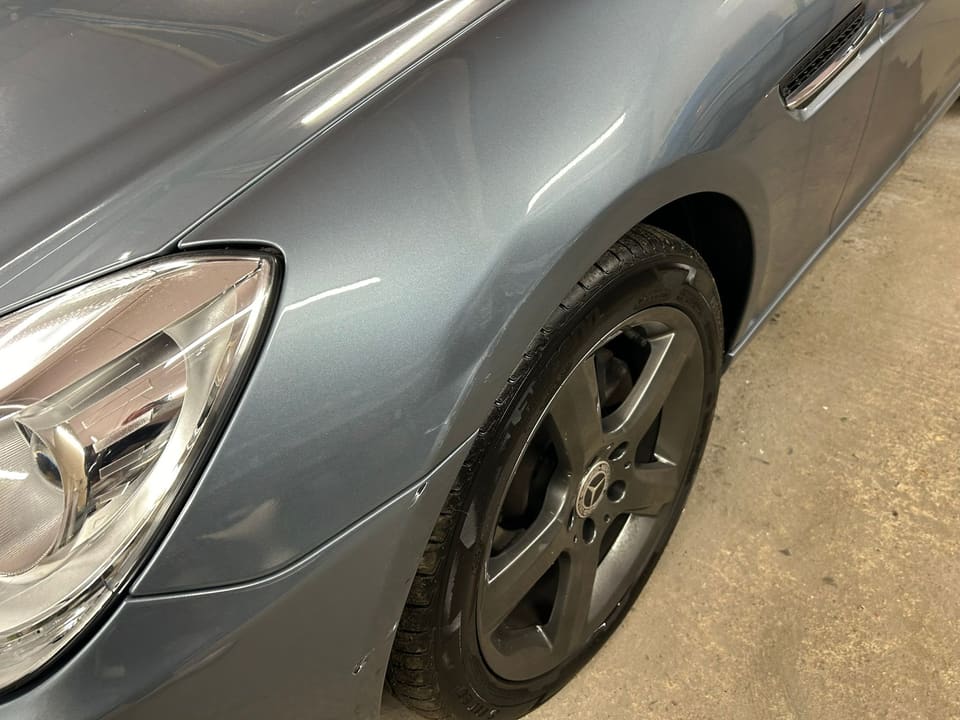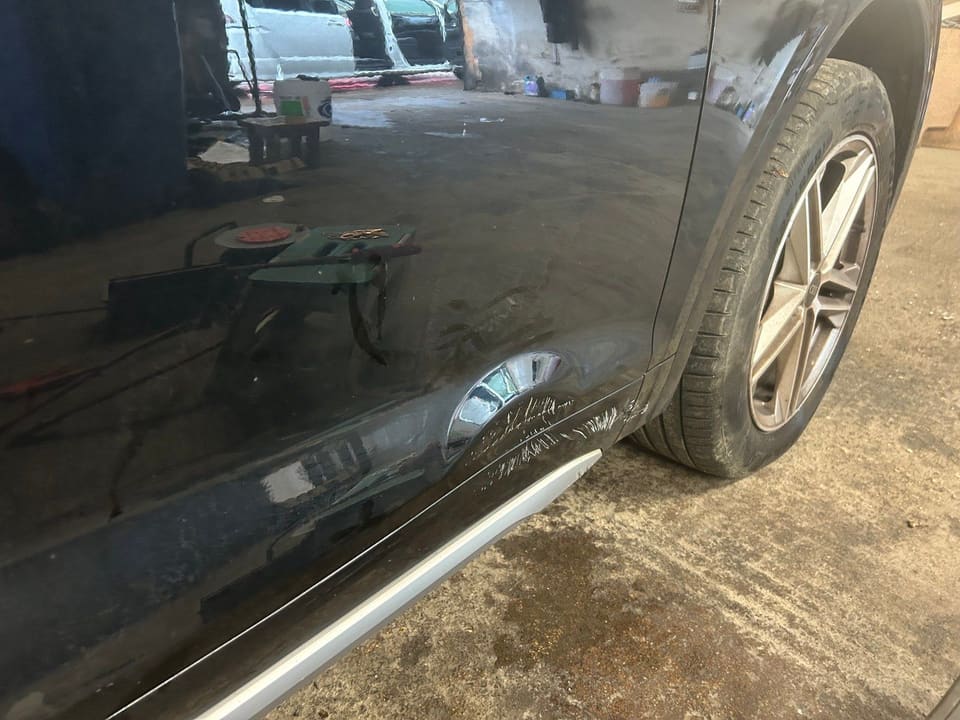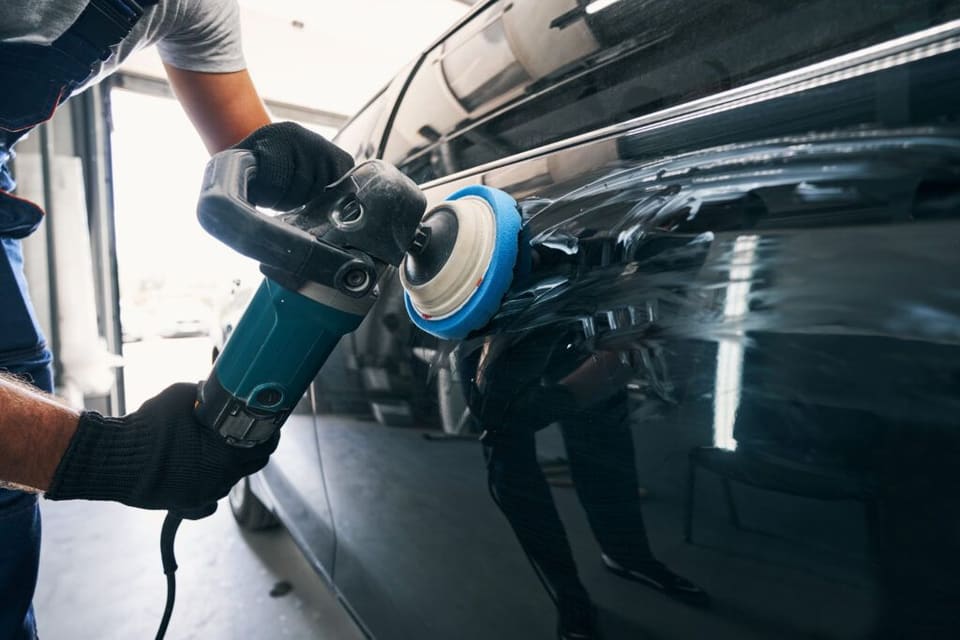
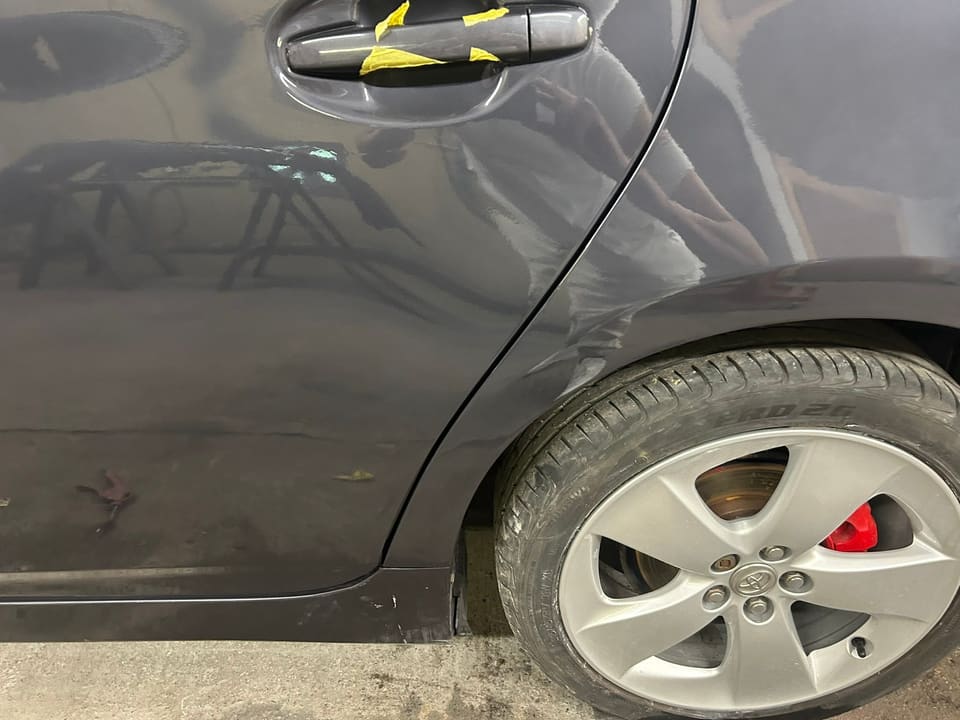
Bubbles under car paint are almost always rust. Water has reached the steel through a chip, a scratch or a seam, and the corrosion is pushing the paint up from underneath. The rust is usually wider than the bubble you can see, so it is worth dealing with early, and corrosion on structural parts can fail an MOT.
A bubble under your car's paint nearly always means rust. Water has reached the bare steel, and the rust takes up more room than the metal did, so it lifts the paint. Caught early, it is a small repair. Left for a few winters, it can eat through the panel. We repair rust at our workshop in Smallfield, near Horley and Gatwick, and the first step is always finding out how far it goes.
What causes bubbles under car paint?
Rust needs iron, water and air. Paint keeps them apart until something breaks the seal. The RAC's car rust guide describes paint bubbling as often an early sign of rust, caused by water and air collecting between the paint and the panel.
The way in is usually one of these:
- A stone chip or scratch that went down to the metal and was never sealed.
- A seam or joint where two panels meet, or where the sealer from the factory has cracked.
- A spot where water and mud sit, such as the lip of a wheel arch or the bottom edge of a door.
- Road salt in winter, which speeds the whole thing up.
If you are seeing chips at the front of the car now, our article on when bonnet stone chips need sorting explains how to stop them turning into this.
Where does rust bubbling usually show up?
The same places come up again and again:
| Area | Why it rusts |
|---|---|
| Wheel arches | Tyres throw water, grit and salt into the lip all winter |
| Sills (the strip under the doors) | Low down, take spray from the road, and are hollow inside |
| Door bottoms | Water runs down inside the door and drain holes can block |
| Tailgate or boot lid | Water collects around the handle, the glass and the lower edge |
| Around the windscreen | Seals age and let water sit against the metal |
Why is the rust bigger than the bubble?
The bubble is only where the paint has finally lifted. Rust spreads sideways under paint that still looks fine, so the corroded area is usually wider than the mark on top. The RAC guide describes stages: surface rust in the top layer, then scale, then penetrating rust that has gone through. A small bubble is often still early. A crusty patch you can push a finger into is not.
What happens if you leave it?
It keeps going. Each winter adds water and salt, the paint flakes, and the metal thins until there is a hole. On a sill, a floor or near a suspension mounting that becomes a safety and MOT question.
Can rust bubbles fail an MOT?
They can, depending on where they are. The government's MOT inspection manual guidance on corrosion uses the term prescribed areas. That means load-bearing parts that things like seat belts, steering or suspension are fixed to, plus any supporting structure within 30cm of those mountings. In a prescribed area, the tester can reject the car if corrosion has made a hole in the metal, or if the area does not feel firm when pressed with finger and thumb.
The MOT manual section on body and structure also lists a body panel that is corroded and likely to cause injury, through sharp edges for example, as a major defect.
Outside those areas, the manual says excessive corrosion on non-structural parts may have little or no effect on safety. A bubble on top of a front wing is normally a looks problem; one on a sill near a seat belt mounting may not be. The tester decides, and our article on whether body damage can fail the MOT covers the wider picture.
Is my rust cosmetic or structural?
As a rough guide, rust on the outer skin of a wing, bonnet, door or tailgate is usually cosmetic. Rust on sills, floors, chassis rails or around suspension and seat belt mountings is structural, because those parts hold the car together. The inside of a sill can be worse than the outside, so we may need to see the car.
How is a rust bubble repaired?
In plain terms, a proper repair looks like this:
- Strip back. The paint is sanded off around the bubble until clean, bright metal shows on all sides.
- Remove the rust. Light rust is ground or sanded out. If the metal has thinned or holed, that section is cut out and new steel is welded in.
- Treat and prime. The bare metal is cleaned and primed to seal it from water and air.
- Fill and shape. Any small dips are filled and sanded so the panel is level again.
- Paint and blend. Colour and lacquer go on in the spray booth and are faded into the surrounding paint.
Painting over a bubble without taking out the rust only hides it for a while. Our rust treatment and repair service explains how we handle it, and where a whole panel needs painting our page on panel and full resprays has the details. Small paint damage that has not reached rust yet is covered by our paint scratch repair service.
Getting a price from us
Send a couple of clear photos on WhatsApp to 07724 146 809, one close up and one showing where on the car the bubble is. You can also ring 01342 649 362 or email info@ericraft.co.uk. The quote is free. Our Ericraft contact and directions page has the opening hours.
Questions people ask
Is bubbling paint on a car always rust?
On a steel panel it almost always is. On a plastic bumper, bubbling or peeling is more likely to be the paint losing its grip on the plastic, which is a different repair.
Can I just sand and touch up a rust bubble myself?
You can slow it down, but unless all the rust is removed down to clean metal it will usually come back through the touch-up.
Will a rust bubble on my wheel arch fail the MOT?
A bubble on the outer arch is usually cosmetic. It becomes an MOT problem if the corrosion is in or near a load-bearing area, has made a hole, or leaves a sharp edge likely to cause injury. The tester decides on the day.
Can rust be repaired without a full respray?
Usually, yes. Most rust repairs only need the affected panel or part of it painting, blended into the paint around it.
Sources and further reading
- GOV.UK, MOT inspection manual, appendix A, structural integrity and corrosion
- GOV.UK, MOT inspection manual, section 6, body, structure and attachments
- RAC, car rust guide: how to remove and prevent it
This page gives general information, not legal or insurance advice. Check your own policy and the official pages above.