
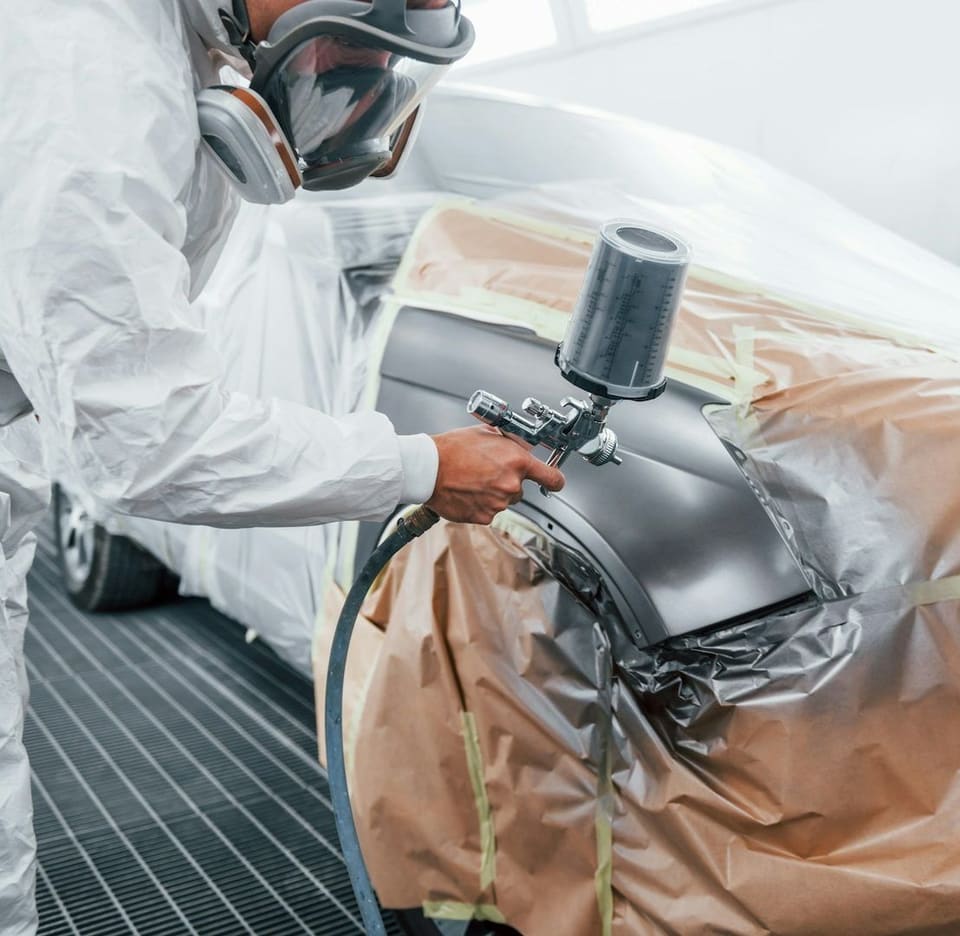
Most damage does not need a full respray. A panel repair fixes one damaged area, a blend feathers the new colour into the next panel so the join disappears, and a full respray is for paint that has failed all over or a deliberate colour change.
People often say "respray" when they mean "fix the paint". A respray is only one of several options, and it is usually the biggest. In most cases the damage is in one place, and a repair to that one place is enough.
Here is how the three main options differ, and how to tell which one your car needs.
What is the difference between a respray, a panel repair and a blend?
- A panel repair deals with one damaged area. The damage is repaired, the panel is prepared and painted, and the car is otherwise left alone.
- A blend is part of a panel repair. The new colour is feathered into the neighbouring panel, so there is no visible edge where new paint meets old.
- A respray repaints larger areas. The RAC says a respray can be full, covering the entire car, or partial, focusing on specific panels like doors or bumpers.
Our car respray page covers partial and full jobs.
When is a panel repair enough?
A repair to a single panel makes sense when:
- The damage is limited to one area, such as a dented door, a scraped wing or a cracked bumper corner.
- The rest of the car's paint is in sound condition.
- The colour is not so difficult to match that the new paint will stand out.
The steps are the same as for any repair. We describe them in our article on how a body shop repair works. Those jobs include the preparation, priming and painting in the booth, and finish with polishing.
What is blending, and why is it done?
Blending is a spray-painting technique that feathers new paint into the adjacent panels so the repair is hard to see. It is needed because a freshly mixed colour rarely matches the panel next to it exactly. A trade glossary puts the causes down to UV exposure, differences between factory batches and shifts in the way metallic flakes lie, even when the colour is matched by computer.
Think of a door that has faded a little in the sun. If you paint the new wing in the exact factory colour and stop at the edge, the difference can show. By spreading the colour across the neighbouring panel, the eye has no line to find. You can read more on our page about colour matching.
Metallic and pearl colours usually need the most care. Plain solid colours are easier. We would say which applies to your car when we see it.
When does a full respray make sense?
A full respray makes sense in a smaller number of cases:
- The paint has failed across the car, with lacquer peeling or fading over many panels.
- There is damage in many places, and repairing each separately would cost more than treating the car as a whole.
- You want a different colour.
- The car is being restored.
The RAC notes that people usually choose a respray to fix scratches, dents or faded paint, or simply to refresh the car's look. For a car with one or two damaged panels, a full respray is usually more than needed.
Where does a scratch fit in?
It depends on how deep it goes. The RAC describes three levels: clear coat only, down to the primer, or down to bare metal. A scratch in the clear coat may polish out. One that catches your fingernail has gone deeper, and may need a repair and repaint of that area.
Our scratch repairs page explains what we do for each. If the mark is small, a SMART repair may be enough, and we would not suggest a bigger job than the damage deserves.
What about damage from an accident?
Accident damage often involves more than paint. There may be a dent, a cracked bumper, or a bracket underneath. The panel is repaired first, then painted, and the blend follows. Our accident repair page explains how we work, and the National Careers Service lists assessing the damage, removing and repairing panels, and refinishing so the colour and finish match the surrounding bodywork as the core of the trade.
How do I choose?
This table is a rough guide. We would confirm it after seeing the car.
| Situation | Usually suits |
|---|---|
| Light scuff in the clear coat | Polishing, or a small scratch repair |
| One dented or scraped panel | Panel repair, with a blend if needed |
| Accident damage to a wing and bumper | Panel repairs, with blending |
| Paint peeling or faded all over | Full respray |
| You want a new colour | Full respray |
Will the colour match?
We mix the colour to suit your car and check it against the panels around it. Paint fades over the years, so the car's age matters. If a perfect match on its own is unlikely, we blend. We would rather tell you what to expect than promise something the paint cannot do.
We are in Smallfield, near Horley and Gatwick, and many of the cars we see have one or two panels needing work rather than a full respray.
Getting a price from us
Send photos on WhatsApp to 07724 146 809, ring 01342 649 362, or email info@ericraft.co.uk. You can also use our contact page. Photos in daylight, taken from a few angles, help us give a first view. We cannot judge a colour match from a photo, so we may ask to see the car. The quote is free, with no obligation.
Questions people ask
What is the difference between a respray and a repair?
A repair fixes the damaged area and paints just that panel, usually with a blend. A respray repaints a larger area or the whole car.
Do I need to respray the whole car to fix one scratch?
No. A scratch is normally repaired and painted on its own panel. A full respray would only make sense if the rest of the paint was also in poor condition.
What does blending mean?
Blending means spraying the new colour out into the neighbouring panel so the join is not visible. It is used because new paint seldom matches the old exactly.
Can you change my car's colour?
A colour change is a full respray, which is a bigger job than a repair. Ask us for a quote and we will talk through what is involved.
Will a repaired panel match the rest of the car?
Our aim is a match you cannot see. Metallic colours and older, faded paint are harder, which is why we blend. Check the panel in daylight before you collect.
Sources and further reading
- RAC, how much does it cost to respray a car
- RAC, how to remove car scratches
- Revol, glossary: blending
- National Careers Service, vehicle body repairer
This page gives general information, not legal or insurance advice. Check your own policy and the official pages above.